



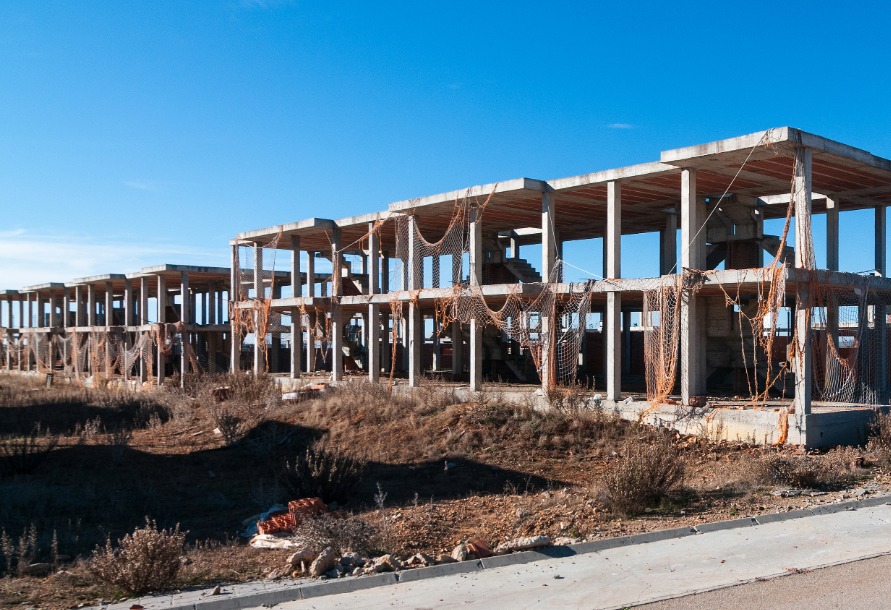
The suspension of public infrastructure projects in Peru constitutes a structural problem that profoundly affects contractual performance, legal risk management, and the competitiveness of the construction sector. According to recent data from the Office of the Comptroller General of the Republic cited by ComexPerú, as of September 2025 the country had more than S/ 42,362 million committed to unfinished public works, distributed across 2,215 projects at the national, regional, and local levels (ComprasEstatales.org, 2026).
Regional governments concentrate a significant portion of the committed resources, with S/ 16,686 million in 306 suspended works, followed by the National Government with S/ 16,636 million and local governments with S/ 9,004 million. Although municipalities account for the largest number of halted projects, the highest amounts correspond to the national and regional levels, indicating that larger-scale works have been interrupted.
From the perspective of construction law, this phenomenon is, in most cases, the result of a series of factors that unfold progressively. Among these, one can mention risk management that fails to reach an estimated level of efficiency; on the other hand, in many cases, detailed knowledge of contractual conditions generates a level of hostility between the parties to the project, who, rather than understanding the contractual mechanisms to address the various contingencies arising from the project, take a defensive path.
For this reason, it is also of vital importance that within a project the fundamental role of the individual appointed as project manager is clearly understood, especially when their powers go beyond the scope of “mere supervision.” Currently, contractual models with high management standards contemplate the role of the Engineer as a manager in all respects, particularly in their decision-making function, as an entity capable of issuing binding decisions for the actors within a construction project.
All of the above can be articulated together with proper dispute management, which implies that correctly managing the risks arising from project execution does not entail the suspension of works, but rather that the contract itself can allow for a dynamic flow of the project while, at the same time, resorting to all effective mechanisms to reach agreements that avoid delays in resolving any dispute.
For any specialist in the field, it is essential to articulate strategies that consider the prevention of contractual risk, the anticipation of conflicts, and the proper interpretation of contractual clauses in public works, in order to ensure the productive continuity of the construction sector in the country.
References:
Expreso. (October 7, 2025). Las obras públicas frenadas le cuestan muy caro al Perú.